Pellet Stove, Wood Stove, or Gas Insert? Choosing the Right Supplemental Heat for a Southern Tier Home
There's nothing quite like coming in from a raw November evening to a room that's genuinely warm. Not "the thermostat says 68" warm, but the kind of warmth you can feel on your hands. That's why so many Southern Tier homeowners add a stove or insert, and why the first question we hear in our showroom is usually, "Which one should I get?"
The honest answer is that it depends on how you live. A wood stove, a pellet stove, and a gas insert all heat a room beautifully, but they ask very different things of you. In this guide, we'll compare them on fuel, effort, power outages, installation, and maintenance so you can pick the supplemental heat that fits your home and your routine.
ANC has been installing hearth products alongside furnaces and boilers since 1963, so we look at a stove the way a heating company should: as part of how your whole home stays warm.
Wood Stoves: Lowest Fuel Cost, Most Hands-On
If you have access to firewood, and plenty of folks around Whitney Point and Owego cut their own, a wood stove can heat your living space for very little money. Wood stoves also run without electricity, which matters when an ice storm knocks the power out for two days.
The trade-off is effort. You'll be splitting, stacking, and hauling wood, and that wood needs to dry for six months to a year before it burns cleanly. Wet wood produces less heat and more creosote, which builds up in the chimney. Modern EPA-certified stoves burn far cleaner and more efficiently than older models, and the EPA Burn Wise program has helpful tips on seasoning and burning wood properly.
ANC carries Vermont Castings, known for time-honored wood stoves; Blaze King, whose catalytic stoves are built for long, steady burns; and Pacific Energy. Our guide to installing a wood-burning fireplace or stove covers what goes into a safe installation.
Pellet Stoves: Set It and (Mostly) Forget It
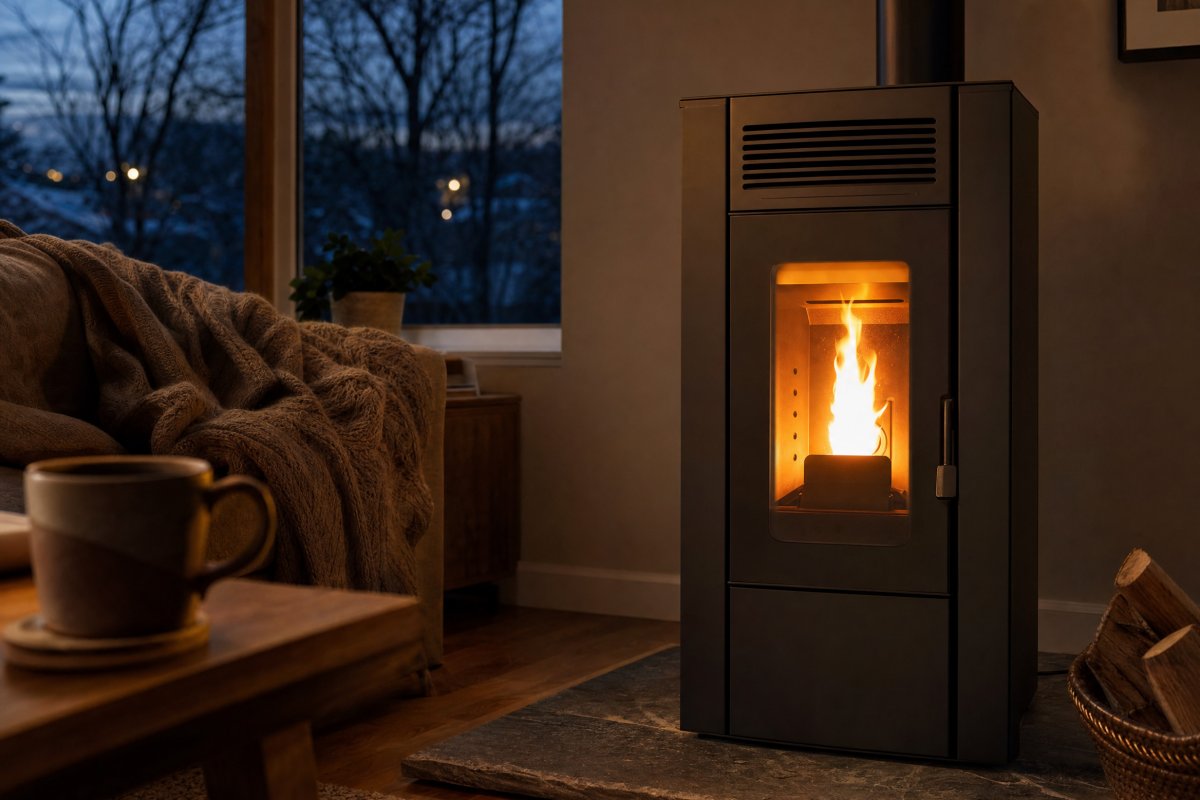
Pellet stoves are the middle ground. They burn compressed wood pellets that come in tidy 40-pound bags, so there's no splitting or stacking. You fill the hopper, set the temperature, and an auger feeds pellets automatically. Depending on the stove and the weather, a full hopper can last a day or more.
Pellet stoves are also flexible to install. Many vent through an exterior wall with a dedicated pellet vent, so you don't need a full masonry chimney. The catch is that they need electricity to run the auger and fans. If outages are common where you live, plan on a battery backup or a generator. ANC offers St. Croix and Enviro pellet stoves, both built for steady, controllable heat. Expect to empty the ash pan and give the burn pot a quick cleaning regularly through the season.
Gas Inserts and Stoves: Push-Button Warmth
For pure convenience, gas is hard to beat. A gas insert or stove runs on natural gas or propane, starts with a button or remote, and many models can be controlled by a thermostat. There's no fuel to haul and no ash to clean. Many gas units can keep running during a power outage too, though this varies by model, so ask before you buy.
If you have an existing fireplace that sends more heat up the chimney than it puts into the room, an insert is often the best upgrade you can make. ANC installs Mendota, America's luxury fireplace, and Valor, known for efficient gas fireplaces with distinction. Our post on why fireplace inserts suit New York winters explains the benefits, and you can browse premium fireplace inserts on our site.
Which Supplemental Heat Source Fits Your Home?
- Choose wood if you have a reliable wood supply, don't mind the work, and want heat that doesn't depend on the power grid.
- Choose pellets if you want wood heat with less effort and thermostat-style control, and you have a plan for power outages.
- Choose gas if you want the least maintenance and the most convenience, especially in an existing fireplace.
Whichever you choose, a stove works best as part of your overall home heating system. Heating the room you live in most lets your furnace or boiler run less, which can lower your bills. The best way to decide is to see them burning in person at our hearth and fireplace showroom on Jennings Street in Endicott.
When to Call a Professional
Stove installation is not a DIY project. Clearances, hearth protection, venting, and chimney liners all have to meet code, and many installations require a permit and inspection. Call a professional if:
- You plan to use an existing chimney that hasn't been inspected recently
- You notice smoke entering the room or a strong smell while the stove is burning
- Flue tiles are cracked or you see heavy creosote buildup
- Your carbon monoxide alarm sounds (get everyone outside, then call)
Every household with a fuel-burning appliance should review our winter carbon monoxide safety check.
Warm Up the Room You Actually Live In
A wood stove, pellet stove, or gas insert can make your favorite room the warmest place in the house all winter long. Explore our full selection of fireplace inserts and freestanding stoves, then stop by the showroom or call (607) 748-6435. Homeowners in Whitney Point, Owego, and across the region can also request an in-home hearth consultation. We'll help you find the right fit and install it safely.