Not All Water Heaters Are Built the Same: What's Actually Inside a Box Store Tank
Almost nobody shops for a water heater calmly. The typical version goes like this: the shower runs cold on a Tuesday morning, or somebody walks downstairs and finds water spreading across the basement floor. By that afternoon you are standing in an aisle looking at four white cylinders that appear identical, comparing the only two numbers on the tag you understand, which are gallons and price.
That is a rough way to make a decision you will live with for a decade or more. And it is why so many Southern Tier homes end up on a replacement cycle that runs shorter than it should, replacing a tank every eight years and assuming that is simply how it goes.
It is not how it goes. The difference between a tank that lasts eight years and one that lasts fifteen comes down to a handful of internal components you cannot see from the aisle. Here is what actually separates them, so you can shop on your terms instead of under duress.
Fittings: Brass Versus Plastic
Start with the connections, because they are the easiest place to cut cost and one of the most common failure points.
Many mass-market tanks use plastic or plastic-composite fittings at the inlet, outlet, and drain valve. They work. They also become brittle over years of thermal cycling, and the drain valve in particular has a habit of weeping or refusing to seal after it has been opened once for maintenance.
The units we sell use brass fittings throughout. Brass tolerates heat cycling, it does not go brittle, and a brass drain valve still closes properly after you have flushed the tank half a dozen times. That last point matters more than it sounds, because a homeowner who cannot flush the tank without causing a leak stops flushing the tank.
Anode Rods: The Part That Decides How Long Your Tank Lives
This is the component almost nobody knows about, and it is the one that determines the lifespan of the whole unit.
Inside every tank is a sacrificial anode rod. Its job is to corrode so that the steel shell does not. Minerals and dissolved metals in your water attack the rod instead of the tank walls, and as long as rod material remains, the tank is protected. When the rod is consumed, corrosion moves to the shell, and the countdown to a leak begins.
Water hardness across Broome, Tioga, and Tompkins counties varies quite a bit, and plenty of homes in this region run water hard enough to eat through an anode rod faster than average. A standard box store tank ships with one rod. The water heaters we install in Greater Binghamton homes ship with two.
Twice the sacrificial material means the protection lasts substantially longer before the tank itself is exposed. It is a quiet, unglamorous difference that shows up years later as a tank that is still dry when the neighbor's is not.
Read the Warranty Before You Read the Price
Water heater warranties are written carefully, and most of them cover less than buyers assume. A typical six or nine year warranty covers the tank itself, prorated, and leaves you paying for the labor to remove the failed unit and install its replacement. That labor is frequently the larger half of the bill.
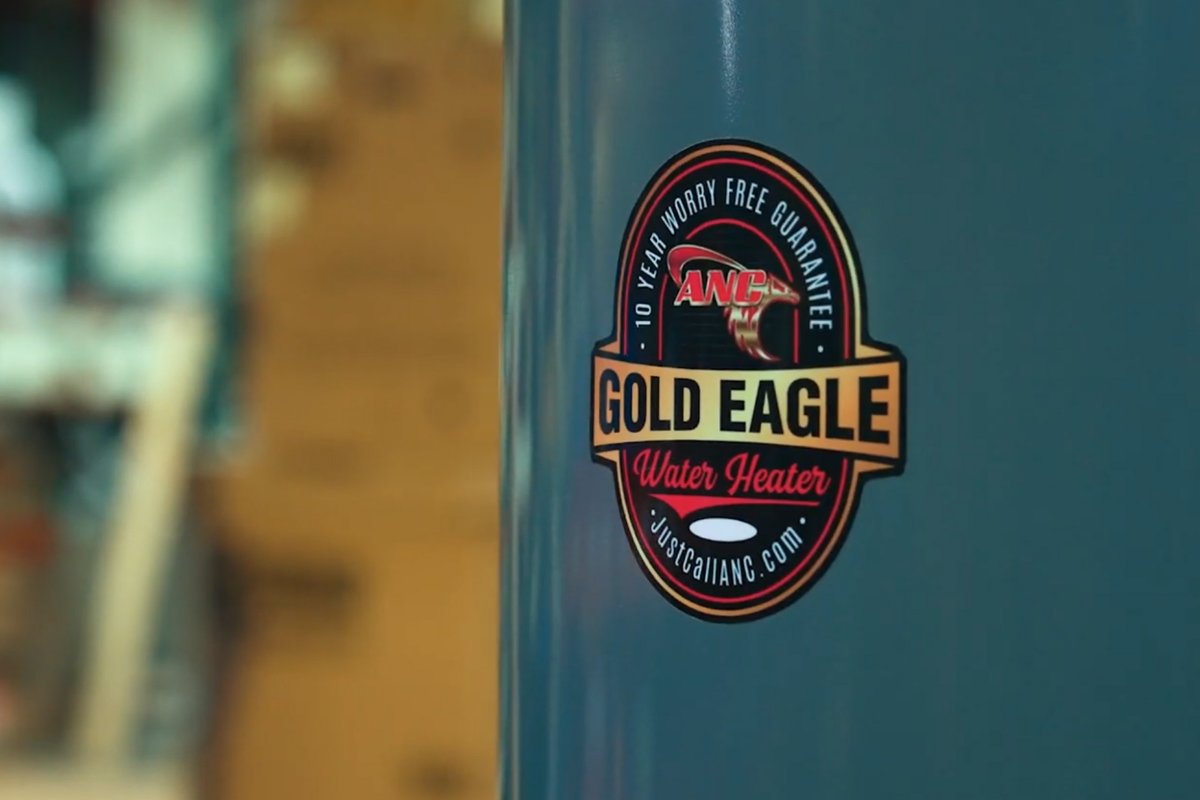
Our Gold Eagle water heater carries a 10 year warranty with a much simpler promise behind it. If it breaks, we fix it. If it leaks, we replace it. No prorated math, no separate labor invoice, and no argument about which component failed. We do not know of another company in this market offering that on a standard tank.
That coverage sits alongside the rest of the Gold Eagle Membership, which starts at $9.99 a month and includes 50% off service call charges, 15% off repairs, no overtime or holiday charges, and priority scheduling when you call. A failed water heater at nine at night on a Sunday is exactly the moment those terms stop being abstract.
Installation Is Half of What You Are Buying
Even a well-built tank underperforms if it is installed poorly, and water heater installation involves more than connecting two pipes. Depending on your home and fuel type, a correct job may involve:
- Proper venting for a gas unit, sized and pitched correctly, with combustion air accounted for
- A thermal expansion tank where the plumbing system requires one
- A correctly installed temperature and pressure relief valve with discharge routed safely
- Sediment trap and gas connection work, or the right dedicated circuit for an electric unit
- Permits and inspection where your municipality requires them
- Removal and disposal of the old tank, which is heavier than it looks and full of water
Venting mistakes are the ones that keep us up at night, because a gas appliance venting improperly is a carbon monoxide risk rather than a comfort problem. If your home has any fuel-burning appliance, our seven minute carbon monoxide safety check is worth running through this fall regardless of what you decide about the water heater.
When to Call a Professional
Do not wait for the flood. Call us if you see rusty or discolored hot water, if you hear rumbling or popping from the tank, if recovery time has gotten noticeably slower, if you find moisture or corrosion around the base, or if the unit is past twelve years old. Any moisture at the base of the tank means replacement planning starts now rather than later.
We have covered the full list of symptoms in two earlier articles: seven warning signs your water heater needs replacing and how long a water heater should last in a Southern Tier home. If you recognize your unit in either one, you are in the good position of replacing on your schedule instead of in an emergency.
Shop Before You Have To
The homeowners who get the best outcome are the ones who replaced a tank that was still working. They compared build quality, understood the warranty, scheduled the work for a convenient morning, and never mopped a basement floor.
If your water heater is somewhere past the ten year mark, this is the fall to have a conversation about it. ANC Heating and Air Conditioning has served families across Endicott, Vestal, Owego, and the wider Southern Tier since 1963, and our NATE-certified technicians will give you a written estimate before any work begins. Call (607) 748-6435, request an appointment online, or read what our neighbors say about working with us. A hot shower tomorrow morning should not be something you have to think about.