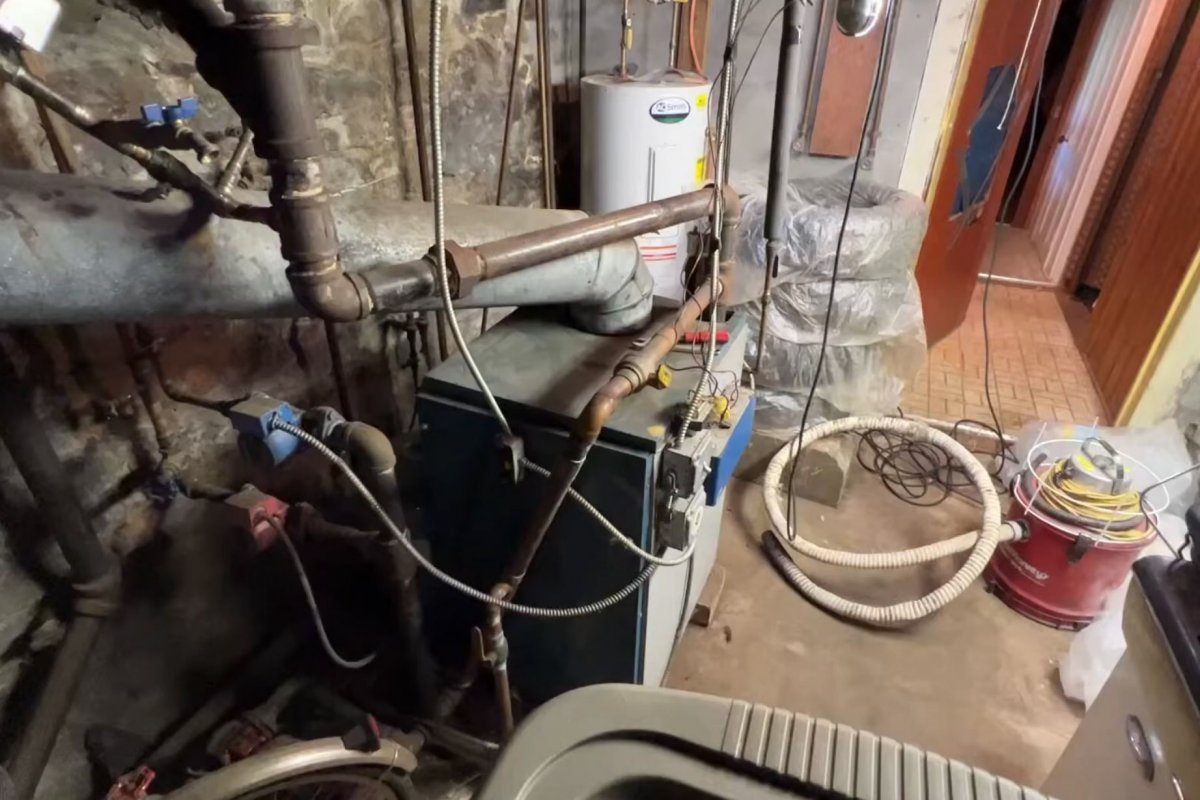
Why Spring and Early Summer Are the Smartest Times to Replace Your Old Boiler in Greater Binghamton
If your boiler limped through another Southern Tier winter — making new noises, short-cycling, struggling to heat the second floor — you already know the answer to the question you’ve been avoiding: it’s on borrowed time. The question isn’t really whether to replace it. It’s when.
Most homeowners wait until something breaks. We see it every January, when the boiler finally quits on the coldest night of the year and the whole family is huddled around space heaters. Here’s the honest truth: spring and early summer are dramatically better times to replace a boiler than winter — and it’s not close. This post walks through why off-season replacement saves money, reduces stress, and actually gives you a better finished installation.
You Have Time to Actually Choose the Right System
Emergency replacements are expensive, and not just because of the timing. When your boiler fails in February, you have two priorities: get heat back, and get it back fast. You’re not comparing efficiency ratings, evaluating brand warranties, or thinking through whether a switch from cast iron to a high-efficiency condensing unit makes sense for your home. You’re taking whatever can be installed tomorrow.
In the off-season, you get to make a real decision. You can compare dependable premium options from brands we install like Lochinvar and Utica — both known for durable construction and strong warranty programs — and figure out which matches your home’s heating load, your hot water needs, and your long-term plans. You can ask questions. You can get multiple opinions. You can actually read the warranty paperwork before you sign.
For homes with old cast-iron boilers running at 60 to 70% efficiency, upgrading to a modern 95%+ condensing unit can cut fuel costs by a third or more. That’s real money, and it’s a decision that deserves more thought than a frantic phone call at 2 AM.
Scheduling Is Flexible — and So Are the Technicians
Winter is emergency season. Every good HVAC company in the Southern Tier runs its crews flat out from December through February, juggling no-heat calls and pushing installations onto whatever day has a gap. That’s not a recipe for a careful, patient installation.
In the spring and summer, we can book installations at a time that actually works for your schedule. You’re not taking a random Tuesday off work because that’s the only opening. You’re not dealing with a rushed crew that’s already thinking about the next emergency call. You get a full day (or two, for more complex systems) with technicians who can take their time, explain the work, and clean up properly before they leave.
That extra attention matters. Boiler installations involve gas lines, water lines, venting, electrical, and combustion air — and every one of those has to be done right. A patient install is a better install, period.
Rebates and Incentives Are Easier to Stack
New York has some of the best rebates and incentives in the country for high-efficiency heating equipment — but navigating them takes time. Programs change, deadlines shift, and paperwork has to be submitted within specific windows after installation.
During the winter rush, rebates often get left on the table because nobody has time to file the paperwork properly. In the off-season, we can walk through:
- NYSEG rebates for high-efficiency heating equipment — current programs are listed on the NYSEG energy efficiency page
- NYSERDA incentives for qualified residential installations
- Federal tax credits under the Inflation Reduction Act for high-efficiency heating and cooling upgrades
- Manufacturer rebates that come and go seasonally
Stacked together, these can knock thousands off the installed price. Our post on how to save thousands with federal and state HVAC incentives covers the current landscape in depth. And for homeowners who want to spread the remaining cost over time, we offer flexible financing options that keep monthly payments manageable.
You Can Test the System Before You Need It
Here’s something most homeowners don’t think about: a new boiler installed in May has five or six months of easy duty cycles before it has to perform in single-digit temperatures. That’s a feature, not a bug.
During that break-in period, we can monitor how the system runs, fine-tune the controls, check for any installation issues while they’re still easy to fix, and confirm everything is dialed in before the real cold hits. If you have a hydronic heating system with multiple zones, we can balance flow rates during shoulder-season heating demand — something you can’t do properly in December when every zone is calling at once.
By the time winter arrives, your new system is a known quantity. You’re not crossing your fingers hoping the installation went smoothly. You’re enjoying a heating bill that’s 25 to 35% lower than last year’s, and a home that heats more evenly than it has in a decade.
Signs You Shouldn’t Wait Another Winter
Not every boiler needs immediate replacement. But some do, and pushing one more season out of a failing unit is a gamble with bad odds. Consider replacing now if your boiler:
- Is 15 years or older (most cast-iron boilers last 20 to 25 years, but efficiency drops sharply after year 15)
- Required more than one significant repair last winter
- Heats the house unevenly, with cold rooms or cold floors
- Makes banging, whistling, or gurgling noises it didn’t make a few years ago
- Shows rust or corrosion on the body, piping, or tank
- Has a cracked or leaking heat exchanger (a safety issue, not just a comfort one)
Our post on 7 warning signs Binghamton homeowners shouldn’t ignore covers the specific symptoms in more detail. And if you’re still on the fence, our framework for deciding whether to repair or replace heating equipment applies equally to boilers.
What About Converting to a Different Heating System?
Off-season replacement is also the right time to consider whether a boiler is still the best solution for your home at all. For some homeowners, particularly those with aging cast-iron radiators in older Binghamton-area Colonials and Victorians, a boiler is still the right answer — and replacing like-for-like makes sense.
For others, particularly those with newer homes or homes that could benefit from whole-home cooling, a conversion to a cold-climate heat pump system might deliver better comfort, lower operating costs, and better rebate stacking. This isn’t a decision to make in an emergency — but it’s a great conversation to have when you have time to think it through.
When to Call a Professional
The right time to start the replacement conversation is before you need it. Ideally, you’re reading this in May or June, thinking about the trouble your boiler gave you in February, and ready to get quotes while you still have time to make a good decision. A typical replacement process includes:
- A free in-home assessment of your current system, heating load, and hot water needs
- Written quotes on 2 to 3 equipment options at different price points
- A walkthrough of rebates, tax credits, and financing that applies to your situation
- Scheduling the install at a time that works for your family, usually within 2 to 4 weeks
- Post-installation commissioning and registration of the manufacturer warranty
Our Gold Eagle maintenance membership carries over to any new equipment we install, so you walk out of the project already covered for priority service and annual maintenance.
Beat the Winter Rush — and the Winter Worry
The homeowners who replace their boilers in the spring never regret the timing. The ones who wait until December often do. A planned replacement during the quiet season is cheaper, smoother, and delivers a better-installed system than any emergency job ever could.
Call (607) 748-6435 or request an appointment online to schedule an in-home boiler assessment. Our team has been installing and servicing boilers across Greater Binghamton, the Southern Tier, and the surrounding communities since 1963 — and we’d rather help you plan a replacement on your terms than rescue you on the coldest night of the year. Take a look at what your neighbors have to say on our testimonials page and get in touch whenever you’re ready.