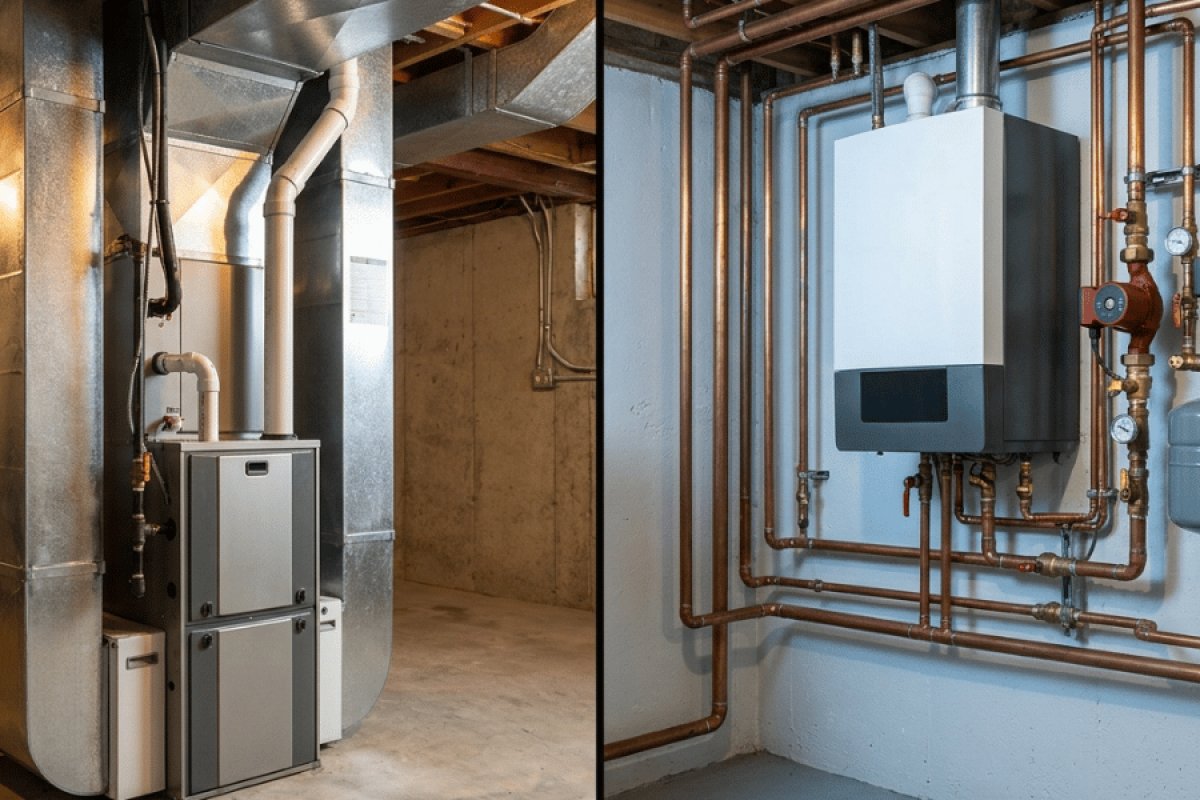
Furnace vs. Boiler: Which Heating System Makes More Sense for Your Home?
Your heating system is getting old, repairs are becoming more frequent, and you've reached that lovely stage of homeownership where you have to start thinking about replacing something expensive.
Naturally, you want to make the right choice.
If you've been comparing furnaces and boilers, you've probably noticed that people have some pretty strong opinions about both. Some homeowners swear by the steady warmth of their radiators. Others wouldn't dream of giving up their forced-air heating.
And the thing is, neither group is necessarily wrong.
Here in Greater Binghamton, we have plenty of older homes with boiler systems, along with newer houses that rely on furnaces. Both can handle an Upstate New York winter when they're properly sized, installed, and maintained.
At ANC Heating & Air Conditioning, we've been helping local homeowners make heating decisions for more than 60 years. And if there's one thing worth knowing before you start shopping, it's that the best heating system isn't always the one with the most impressive features.
It's the one that makes sense for your house.
So, let's talk about how furnaces and boilers actually compare, what you'll notice living with each one, and where your money is best spent.
First, What's the Difference Between a Furnace and a Boiler?
The main difference between a furnace and a boiler is how they deliver heat throughout your home.
A furnace heats air and pushes it through ductwork and vents, while a boiler circulates hot water through pipes connected to radiators, baseboards, or radiant floor heating.
Both keep your home warm, just in very different ways.
|
Feature |
Furnace |
Boiler |
|
How it heats your home |
Warm air through vents |
Hot water through radiators or baseboards |
|
What you'll notice |
Air blowing when the heat runs |
Warm radiators or baseboards |
|
Noise |
Blower and airflow sounds |
Generally quieter, though pumps and pipes can make noise |
|
Heating response |
Often warms rooms relatively quickly |
May take longer to respond to temperature changes |
|
Air conditioning |
Can share ductwork with central AC |
Needs a separate cooling system |
|
Routine upkeep |
Filter changes and professional maintenance |
Professional maintenance of water-side components and controls |
The differences sound simple enough on paper, but once you start living with either system, there are a few things you'll notice.
What Homeowners Tend to Like About Furnaces
If you've ever walked over to a floor vent on a cold morning just to stand in the warm air for a minute, you already know one of the perks of a furnace.
You can actually feel it working.
Forced-air systems typically respond fairly quickly when you raise the thermostat. The furnace heats the air, the blower moves it through the ducts, and warm air starts reaching your rooms.
That's especially convenient if you prefer turning the heat down overnight and warming the house back up in the morning.
Furnaces also have another advantage: they can use the same ductwork as your central air conditioner.
If your home already has a forced-air heating and cooling setup, that can make replacing your furnace a relatively straightforward decision.
But There Are a Few Trade-Offs
Not everyone loves the sound of air rushing through vents. And if your ductwork has leaks, restrictions, or poor airflow, you might end up with one bedroom that's freezing while the living room feels like July.
Furnaces also need regular filter changes, and some homeowners notice more air movement or drafts when the blower runs.
That doesn't mean furnaces are uncomfortable. It means the condition of your ductwork and how well the system is installed matter just as much as the equipment itself.
A furnace may be the better fit if:
-
Your home already has ductwork in good condition.
-
You want your heating and central air conditioning to share the same duct system.
-
You prefer a system that warms your home relatively quickly when you adjust the thermostat.
Why Some Homeowners Wouldn't Trade Their Boiler for Anything
There's a reason you'll still find so many boiler-heated homes throughout Binghamton, Endicott, and Johnson City.
People like the way they feel.
Instead of warm air blowing through vents, radiators and hydronic baseboards gradually warm the surrounding space.
The result is often a quieter, more even-feeling warmth without a blower kicking on every time the thermostat calls for heat.
If you've spent years living with radiators, switching to forced air might actually feel like a downgrade, even if the new furnace is technically more efficient than your old boiler.
That's something worth considering.
What Might You Not Love About a Boiler?
For starters, boilers don't provide air conditioning.
If you want central cooling, you'll need a separate system, such as ductless mini-splits or central AC with its own ductwork.
Some boiler systems also take longer to warm up after you've turned the thermostat down, particularly those with large cast-iron radiators.
And while you won't have furnace filters to change, boilers still need professional maintenance. Pumps, valves, pressure controls, expansion tanks, and other components all need to work properly.
A boiler may be the better fit if:
-
Your home already has radiators or hydronic baseboard heating.
-
You prefer quieter heating without air blowing through vents.
-
You want to keep your home's existing heating setup rather than install new ductwork.
Which Costs More: A Furnace or a Boiler?
This is usually where the conversation gets interesting.
Because if you're replacing your heating system, you probably care a lot more about what the final bill looks like than whether one system heats air or water.
And here's something homeowners don't always realize:
The cost of changing how your home distributes heat can be much greater than the difference between the furnace and boiler themselves.
Let's say you live in an older Binghamton home with cast-iron radiators and a boiler that's finally reached the end of its life.
You could replace that boiler and continue using the existing radiators and piping, assuming they're in good condition.
Or you could switch to a furnace.
But now you need somewhere for all that warm air to travel. That means finding space for ductwork, installing supply and return vents, and potentially opening walls or ceilings.
Suddenly, what started as a heating replacement has become a much bigger project.
The same thing happens in reverse.
If your home already has a furnace and ductwork, switching to a boiler means adding piping and some form of hydronic heat distribution throughout the house.
Neither conversion is impossible, but it needs a good reason behind it.
What About Monthly Heating Bills?
Don't assume a boiler is automatically cheaper to run because it uses water, or that a furnace is cheaper because it heats air.
Both are available in high-efficiency models, and modern high-efficiency boilers can be a worthwhile upgrade when they're properly matched to your home's heating needs
What you'll actually spend depends on the equipment's efficiency, fuel type, local energy prices, insulation, and how much heat your home needs.
A properly sized high-efficiency gas furnace may cost less to operate than an older boiler, but a modern high-efficiency boiler could outperform an aging furnace.
And remember that advertised efficiency ratings don't tell the whole story. Leaky ductwork, poorly insulated pipes, incorrect sizing, and installation problems can all affect what you actually pay to stay warm.
Our advice: Compare specific replacement systems using your home's heating needs and current fuel costs. A general furnace-versus-boiler comparison won't tell you which one will save you money.
Should You Stick With the Heating System You Already Have?
In many cases, yes.
And that's probably the most useful piece of advice we can give someone overdue for a replacement.
If you have a furnace and your ductwork is in good shape, replacing it with a modern furnace often makes the most sense.
If you have a boiler and your radiators are doing their job, installing a new boiler may be the more practical investment.
That doesn't mean you should automatically replace what you have without asking questions.
There are good reasons to consider changing systems, especially if you're planning a major renovation, adding air conditioning, or dealing with serious problems in your existing ductwork or piping.
But if your only reason for switching is that someone told you boilers are better than furnaces (or vice versa), we'd suggest getting a second opinion before spending the money.
Three Questions Worth Asking Before You Buy
Whether you're leaning toward a furnace or a boiler, these are the questions we'd want answered before recommending new equipment.
1. Is my current heating system the problem, or is something else making the house uncomfortable?
If certain rooms never seem warm enough, the issue might involve insulation, ductwork, piping, or heat distribution rather than the furnace or boiler itself. Replacing the equipment without addressing the real problem may leave you with the same cold rooms and a much lighter wallet.
2. How do you know what size heating system my house needs?
A bigger furnace or boiler isn't necessarily better. In fact, ENERGY STAR emphasizes the importance of properly sizing heating equipment to avoid unnecessary cycling, comfort problems, and wasted energy.
Ask whether the contractor will calculate your home's heating load rather than simply matching the capacity of your old equipment.
3. What else will I need to replace or upgrade?
Will your existing ductwork or piping work with the new equipment? Are there venting changes, electrical updates, or other installation requirements? And if you're considering switching systems, what will that conversion actually involve?
These are the details that can make a big difference in the final cost.
So, Is a Furnace or Boiler Better for a Binghamton Home?
Both can be excellent choices for Upstate New York winters.
If you want relatively quick heating and already have ductwork, a furnace is often the practical choice.
If you love the quiet, steady warmth of radiators and your home already has a hydronic heating system, there's a strong case for sticking with a boiler.
But if you're replacing an older system, don't make the decision based on which type of heat sounds better. Make it based on what your house needs.
That means looking at your existing setup, comfort problems, installation costs, and long-term operating expenses before choosing equipment.
Let's Find a Heating System That Makes Sense for Your Home
Replacing a heating system is a big investment, so you should feel confident about what you're getting and why it's the right choice.
At ANC Heating & Air Conditioning, we've spent more than 60 years helping Greater Binghamton homeowners stay comfortable through some pretty unforgiving winters.
Whether you're replacing an old furnace, upgrading a boiler, or wondering if switching systems is worth it, we'll help you understand your options before you make a decision.
Request an appointment with ANC and let's talk about what makes sense for your home.
Because a new heating system should solve your heating problems, not give you a whole new set of them.