Think Your Furnace Is Fine? Check These 4 Things First
By October, you and your furnace have had plenty of time to get reacquainted with one another.
And let's be honest: as long as you hear it kick on and the house gets warm, you're probably not worrying too much about it. But just because the heat works doesn’t necessarily mean it’s working as well as it should.
Your furnace can still get the job done while giving you some pretty clear warning signs that something isn't right. Maybe it's cycling more often, the airflow feels weaker, it's making a noise you don't remember from last year, or the house is simply taking longer to warm up.
Those changes are easy to brush off right now because, after all, the heat still works. But once winter really settles into Upstate New York and your furnace has to work a whole lot harder, a small problem can become much harder to ignore.
At ANC Heating & Air Conditioning, we'd rather help you catch those signals now than have them turn into a no-heat problem later. That's why now's a good time to give your furnace a little attention.
Here are four things worth checking.
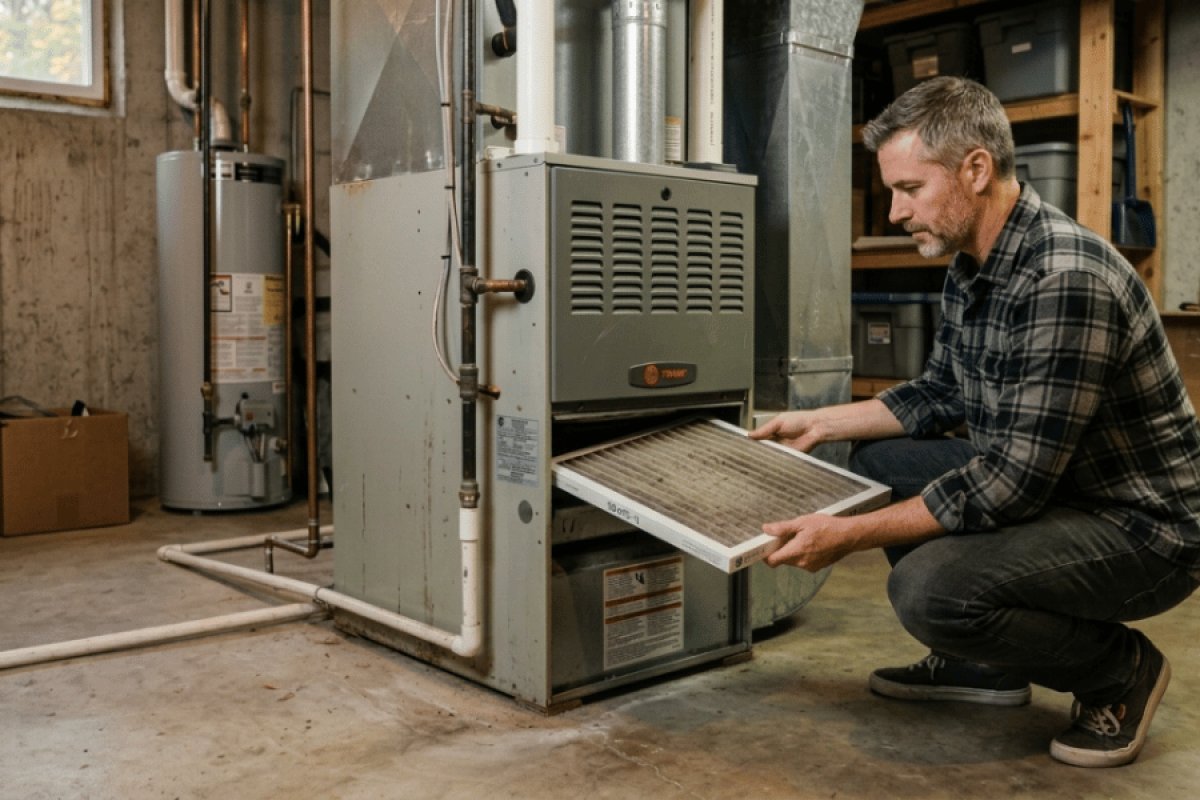
1. Pull Out the Furnace Filter and Look at It
Life is too busy to try and remember when you changed it last, so just pull it out and check.
Hold the filter up to a light. If it's heavily coated in dust, packed with pet hair, or you can barely see through it, that’s your cue to replace it with the correct size and type for your furnace.
Why does this matter?
Your furnace has to pull air through that filter before it can heat and distribute the air to the rest of your home. When that filter gets clogged, less air can get through, forcing your furnace to work harder to keep your home comfortable.
A severely clogged filter can cause overheating and furnace shutdowns, so this isn't just about keeping dust out of the house.
Your five-minute check:
-
Turn the furnace off at the thermostat.
-
Remove the existing filter.
-
Check it for heavy dust and debris.
-
Replace it if it's dirty.
-
Make sure the airflow arrow on the new filter points in the correct direction, toward the furnace/blower.
Once the new filter is in, turn the heat back on and see whether the airflow from your vents improves.
If the furnace is still struggling with airflow, frequently shutting off, or acting differently than normal, the filter probably wasn't the whole problem. A professional furnace tune-up can help uncover what else may be going on.
2. Turn the Heat On and Walk the House
Now we're going to put your furnace to a very simple test.
Set the thermostat a couple of degrees above the current room temperature so the furnace starts. Once it's been running for a few minutes, walk through the house.
You aren't trying to decide whether every room is exactly the same temperature. You're looking for anything that seems noticeably different from last winter.
Walk from room to room and put your hand near a few of the vents. You should be able to feel warm air coming out while the furnace is running.
Found one that’s a bit weak? Before assuming something is wrong with the furnace, check what's around it.
Furniture, curtains, rugs, storage boxes, and pet beds can all block the return vents, and it's the kind of thing you might not think twice about until it starts affecting your comfort.
Make sure the registers themselves are fully open, too.
Your five-minute check:
-
Open every supply register.
-
Move anything blocking a supply or return vent.
-
Compare the airflow between rooms.
-
Pay particular attention to rooms that suddenly feel colder than they did last winter.
And don't close vents in warmer rooms hoping it'll send more heat to the colder ones. It doesn't work that way. Closing vents can actually create more problems instead of solving the one you started with.
If one room is still noticeably colder or has very little airflow after you've cleared the vents, take note of it. There may be a ductwork, airflow, insulation, or system-balancing issue that needs a closer look.
3. Listen to One Full Furnace Startup
Yes, we're really asking you to listen to your furnace.
Stand somewhere you can hear the system clearly, raise the thermostat a few degrees to prompt the heat to kick on, and listen from startup until warm air begins coming through the vents.
Some sounds are just part of normal operation. After all, your furnace isn't supposed to be completely silent. A steady hum while it's running is normal, along with the sound of air moving through your vents.
What you're listening for is something new, loud, or repetitive.
That could include:
-
Repeated clicking while the furnace struggles to start
-
Squealing or screeching once the system is running
-
A new, persistent rattle
-
Banging or booming when the furnace starts
Your five-minute check: Don't worry about figuring out what's causing the noise. Instead, pay attention when you hear it.
-
Turn the heat up and listen as the furnace starts.
-
Notice whether the noise begins right away or when the blower kicks on.
-
Pay attention to whether it stops after a few seconds or continues while the furnace runs.
-
Make a quick note of what the noise sounds like and when it happens.
Those details can be helpful if you need to end up calling us for a furnace repair. Telling us "There's a weird noise" is pretty vague, but saying "It rattles as soon as the blower comes on" gives them a much better idea of where to start.
And please don't remove furnace panels to track down the source yourself. If the sound is new, persistent, or getting worse, that's the point where the DIY portion of this check ends.
4. Give Your Furnace a Thermostat Test
This one requires you to do something homeowners aren't always great at: leave the thermostat alone—but only just for a bit.
When the house feels a little chilly, it's easy to bump the thermostat up a couple of degrees. Still cold? You bump it up again.
Before long, you're adjusting the thermostat over and over without stopping to ask why the house isn't getting comfortable in the first place.
Instead, set the thermostat to your normal comfortable temperature and leave it there for a while. Give your furnace a chance to do its job, then pay attention to how well it actually does.
Your test:
-
Set the thermostat to your normal temperature.
-
Leave it there rather than continuing to turn it up.
-
See whether the furnace reaches the setting.
-
Walk through the house once it does and see whether the rooms actually feel comfortable.
-
Pay attention to whether the furnace shuts off normally or starts another heating cycle unusually soon.
If the thermostat reaches 68°F but half the house still feels cold, that's useful information.
If the furnace runs for a long time and never reaches 68°F, that's useful information, too.
And if you're constantly increasing the temperature just to stay comfortable when you didn't have to do that last winter, don't assume you've suddenly become a person who needs the house at 74°F.
Something may have changed.
Airflow, thermostat operation, ductwork, furnace performance, and heat loss from the home can all affect comfort. If the simple checks above don't explain it, that's when you want a technician to dig deeper.
Some Things Are Better Left to the Pros
At this point, you've done plenty.
You've checked the filter, tested airflow around the house, listened to a furnace startup, and seen whether the system can actually get your home comfortable.
What you haven't done is open up the furnace to see what's going on inside.
And that's exactly how it should stay. You've done the easy checks. We'll handle the hard part.
Burners, flame sensors, electrical connections, gas components, heat exchangers, and safety controls aren't DIY projects. Properly checking those parts requires the right tools, training, and knowledge of how the furnace should be operating.
That's also why professional furnace maintenance goes beyond the checks you can do around the house.
A technician can inspect the internal components and safety controls you can't evaluate yourself and look for developing problems before the furnace gets into the heavier part of the Upstate New York heating season.
ANC's Gold Eagle Membership is $9.99 per month and includes annual maintenance, priority service, and no overtime fees for nights, weekends, or holidays.
If remembering to schedule furnace maintenance every year is a struggle, the membership takes that job off your list.
Don’t Wait for Your Furnace to Get Your Attention
You don't need to understand how every part of your furnace works to notice when something is different.
Pull the filter out and look at it. Walk the house while the heat is running. Listen to one startup. Leave the thermostat alone long enough to see how the furnace actually performs.
If everything checks out, great.
If it doesn't, you've caught it while it's still October instead of waiting for your furnace to make the decision for you in January.
Request an appointment with ANC Heating & Air Conditioning and let us take a look before that small issue has a chance to become a much bigger one.