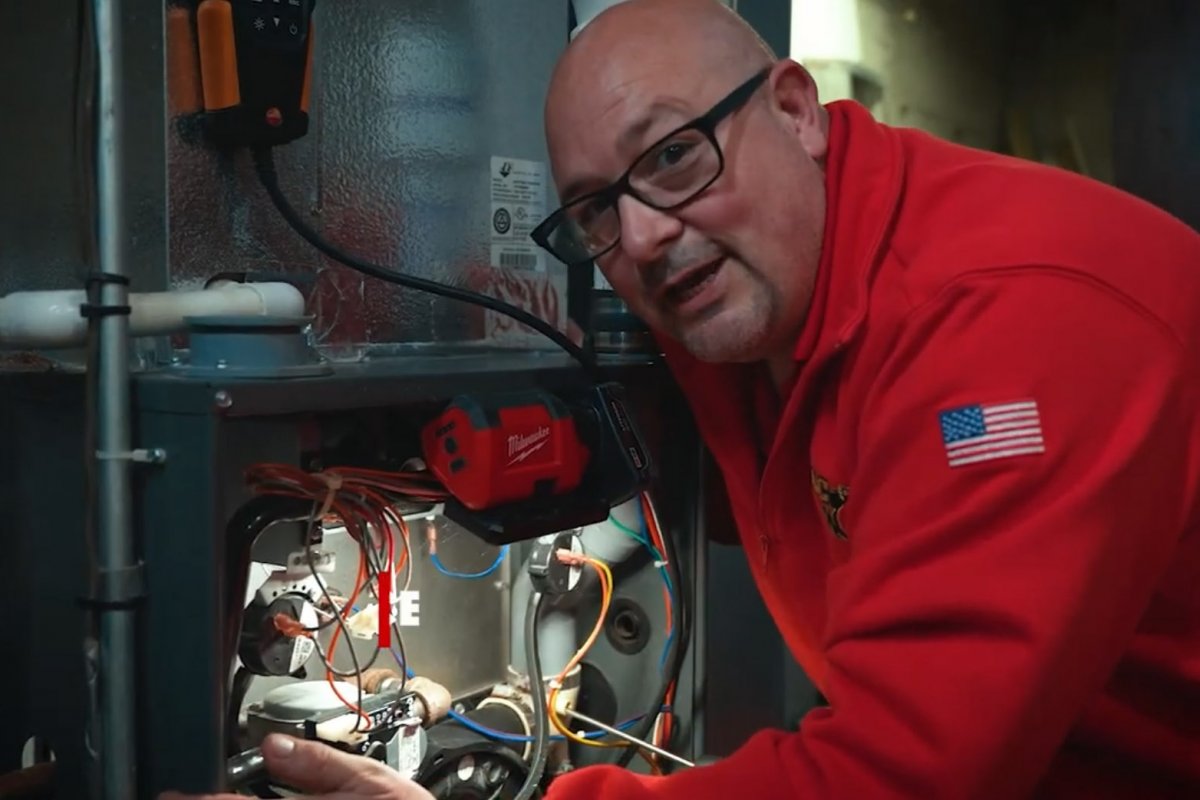
What Actually Happens During a Professional AC Tune-Up? A Room-by-Room Walkthrough
“Is this AC tune-up thing actually worth it, or is it just an upsell?” It’s a fair question, and one we hear every spring. If you’ve ever scheduled a maintenance visit and watched the technician disappear for 45 minutes before handing you an invoice, it’s natural to wonder what really happened.
The honest answer: a real tune-up is a detailed, 20-plus-point inspection that touches nearly every component of your cooling system — inside and outside the house. A quick “look and leave” isn’t a tune-up; it’s a sales call. This post walks you through exactly what our NATE-certified technicians do during a professional AC tune-up, so you know what to expect and what to ask for — whether you call us or anyone else.
Outside: The Condenser Unit Inspection
Every tune-up starts outside, at the condenser — the big metal box sitting on a pad next to your house. This is where the heat your AC pulls out of your home gets dumped into the outdoor air, and it takes a beating from weather, grass clippings, cottonwood fluff, and whatever else ends up in your yard.
Here’s what we do outside:
- Shut off power at the disconnect and inspect the electrical connections for corrosion, loose terminals, and burn marks
- Remove the top grille and clear debris from inside the cabinet — leaves, sticks, and sometimes animal nests
- Rinse the condenser coil with a proper coil cleaner and low-pressure water (never a pressure washer, which bends the fins)
- Check the contactor and capacitor with a meter — weak capacitors are one of the most common causes of mid-summer failures
- Inspect the compressor’s operating amperage and compare it against the manufacturer’s specifications
- Confirm the unit is level on its pad, since a tilted condenser puts strain on the refrigerant lines over time
This outside portion alone catches about half the issues we find during tune-ups. A dirty condenser coil can cut your system’s efficiency by 20% or more — you’re paying for cooling you’re not getting.
Inside: The Evaporator Coil, Blower, and Air Handler
Next, we move inside to the indoor half of the system — typically in your basement, attic, or utility closet, depending on how your home is set up. This side handles the actual air moving through your ducts, and it’s where indoor air quality, efficiency, and comfort all come together.
Inside, we check:
- The evaporator coil for dust buildup, biological growth, and proper drainage (a clogged drain pan is a leading cause of summer water damage)
- The blower motor and wheel, which accumulate dust that throws them out of balance and reduces airflow
- The air filter — and we’ll let you know if the one you’re using is actually helping or hurting, as we explained in our post on why hardware store air filters often do more harm than good
- The condensate drain line for clogs, and we’ll flush it with a cleaning solution
- The blower compartment for gaps or disconnected ducts that leak conditioned air into unconditioned spaces
If you’ve ever had a ceiling stain appear mysteriously in July, this is where it started — a neglected condensate line that backed up and overflowed.
The Refrigerant and Airflow Diagnostics
This is the part of the tune-up that separates professionals from amateurs. Measuring refrigerant charge and airflow requires proper gauges, calibrated instruments, and the know-how to interpret the readings.
A technician should:
- Connect gauges and measure the refrigerant pressures on both the high and low side
- Calculate superheat and subcooling to determine whether the system is properly charged (not just “full”)
- Measure the temperature differential between the return air and supply air — a healthy system delivers a 16 to 22 degree drop
- Check static pressure in the ductwork, which reveals hidden airflow restrictions
- Inspect for refrigerant leaks using electronic detection if anything looks off
If your system is low on refrigerant, just adding more is a band-aid. The refrigerant didn’t evaporate — it leaked, and we’ll find the source before we add anything. This is especially important as older systems transition away from R-410A, which is being phased down under federal regulations.
The Thermostat, Controls, and Final Test
Before we pack up, we verify the brains of the system are talking to the body properly. We test the thermostat for accurate readings, check the sequence of operations (does the fan come on before the compressor? Does it shut down in the right order?), and confirm all safety switches are functional.
We also run the system through a full cooling cycle and document the final performance numbers — supply temperature, return temperature, amperage, and pressures — so you have a benchmark to compare against next year. If you have a smart thermostat, we’ll verify it’s communicating correctly with your equipment.
What You’re Really Paying For
A proper tune-up takes 60 to 90 minutes for a typical central AC system. If someone is in and out in 20 minutes, they didn’t do the work — full stop. What you’re paying for isn’t the checklist itself; it’s the early detection of small problems before they become expensive failures on the hottest weekend of the year.
Here’s what a thorough tune-up actually buys you:
- A 10 to 20 percent reduction in cooling costs from a clean, properly charged system
- Early detection of worn capacitors, weak contactors, and refrigerant leaks before they cause breakdowns
- Extended equipment life — a maintained Amana system routinely lasts 15 to 18 years versus 10 to 12 for a neglected one
- Written documentation that supports manufacturer warranty claims
- Peace of mind going into July and August
If you want this work done every year without having to remember to call, our Gold Eagle maintenance membership includes tune-ups for both your heating and cooling systems, plus priority service and discounted repairs. For most homeowners, the membership pays for itself on the first avoided repair.
When to Call a Professional
You should schedule an AC tune-up if:
- It’s been more than 12 months since your last professional service
- Your cooling bills have crept up without any change in your usage habits
- The system is running longer to hit the setpoint than it used to
- You hear unusual sounds — buzzing, clicking, or gurgling
- You notice ice on the refrigerant lines or water pooling near the indoor unit
Spring is the ideal time to schedule, both because the weather is mild (so your technician isn’t rushing through a hot day of emergency calls) and because you want issues caught before the first heat wave. Our post on why spring is the best time for an AC tune-up goes deeper on the timing question.
Schedule Your Tune-Up Before the Heat Arrives
A tune-up is the single most effective thing you can do to protect your cooling investment, and the best spring you’ll ever have is the one where nothing goes wrong in July. Our team serves homeowners across the Southern Tier, Greater Binghamton, and the surrounding Finger Lakes communities, and we’ve been at this since 1963.
Call (607) 748-6435 or request an appointment online. You can read what your neighbors have to say on our customer testimonials page — and if you want to know more about who we are before you book, our why choose ANC page lays it out.